
Puppy Food Guide: Choosing the Right Food & Building Healthy Mealtime Habits
Puppy Food Guide: Choosing the Right Food & Building Healthy Mealtime Habits
Including Puppy Food Guide by Age
“Feeding isn’t just fuel, it’s relationship building.”
Puppies are in one of the most crucial growth stages of their lives. Their bones are forming, brains are developing, immune systems are building resilience and what you feed them nowwill shape their physical and emotional wellbeing long into adulthood.
As an ethical breeder, I approach nutrition not only from a biological lens but also through the lens of attachment and routine. Mealtime is more than a bowl of food, it’s an opportunity to bond, establish safety, build trust, and reinforce nervous system regulation.
Let’s look at how to feed your puppy withnourishmentfor body and mind.
Choosing the RightPuppy Food
Not all dog food is created equal. In fact, many popular brands on store shelves prioritize shelf life over substance. Here’s what you need to know when choosing the right food for your puppy:
Look for “Complete & Balanced” formulas
Check all LABELS look forCanadian Feed Control Officialsapproval to ensure the food meets minimum nutritional standards for growing puppies.
Key Ingredients to Prioritize inPuppy Food:
High-quality protein(e.g., chicken, turkey, lamb, salmon not“meat meal”)
Healthy fatsfor skin, coat, and brain development (including DHA)
Calcium & phosphorusin the right ratios for bone growth
Digestible fiberto support gut health
Avoid These inPuppy Food:
Artificial dyes or flavors
Generic “meat by-products”
Corn, wheat, or soy as primary ingredients
Breed Size Matters forPuppy Food:
Large breed puppies (like labs, retrievers, shepherds) need formulas designed to slow growth and protect developing joints.
Kibble vs. Raw vs. Cooked vs. FreshPuppy Food
There’s no one-size-fits-all solution. The best food is one that’s nutritionally sound, suits your puppy’s body, and aligns with your ability to maintain consistency.
Kibble
Convenient and shelf-stable
Check for real meat, not filler
Watch for preservatives or low-quality ingredients
Raw
Mimics ancestral diet
Risk of bacterial contamination if not handled correctly
Requires strict nutritional balanceconsult a pro
Cooked/Fresh
Gentle on digestion, easier to customize
Requires time, planning, and freezer space
High in moisture, great for picky eaters
Always consult your veterinarian or a certified canine nutritionist before switching diets.
How Often to Feed Your Puppy (By Age)
Puppies thrive onroutine—both biologically and emotionally. Here’s a simple breakdown:
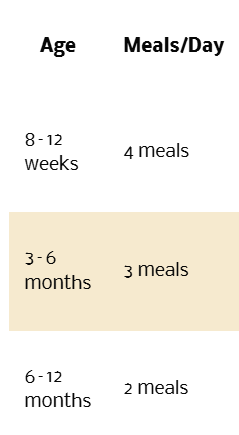
Stick to a feeding schedule: same times each day = better digestion, easier potty training, and calmer behavior.
Creating a Calm Mealtime Puppy Feeding Routine
Feeding is not a free-for-all. It’s adaily ritualthat helps your puppy feel grounded and safe.
Designate a calm, quiet spaceaway from distractions
Use the same bowl and locationeach time
Ask for a simple cuelike“sit”or"wait“ before placing the food down
Don’t hover or micromanagegive them space
Remove uneaten food after 15–20 minutesto discourage grazing
Routine teaches your puppy to feel safe, seen, and nourished, both physically and emotionally.
UsingPuppy Foodfor Training and Bonding
Feeding time is a beautiful opportunity to connect and build trust.
Try hand-feeding a few piecesof kibble each day. This builds attachment, especially in shy or rescue pups.
Use mealtime for positive reinforcement training:
Reward calm behavior, basic cues, and leash training with food-based praise.
Introduce puzzle feeders or slow bowlsfor:
Mental stimulation
Slower eating
Enrichment
Meal-based enrichment supports brain developmentandreduces boredom-based behaviors.
Red Flags in Puppy Food Eating Behavior
Stay attuned to your puppy’s patterns. Their appetite speaks volumes about their health and emotional state.
Signs to watch:
Suddenrefusal to eat
Gulping foodtoo quickly
Food guardingor growling
Vomiting, diarrhea, or excessive gas
These could point to:
Food sensitivities
Anxietyor lack of safety at mealtime
Overfeeding or underfeeding
Medical issues
If appetite changes last more than 1–2 days, call your vet.
HealthyPuppy Food, Healthy Puppy, Healthy Bond
“Feeding is an act of care that builds trust, balance, and connection.”
When you feed with presence, patience, and awareness, your puppy doesn’t just grow strong, they grow secure. You’re setting the tone for a relationship based on attunement, love, and respect.
Take time to research, observe, and personalize your feeding routine. Make food a part of your connection ritual, not just a daily task.
Your puppy’s body will thank you and so will their heart.
